Let me guess — you have heard the term EPR thrown around a lot lately, especially if your business deals with electronics, batteries, or packaging. But what does it actually mean? And more importantly, does it apply to you?
The short answer is — if your business manufactures, imports, or sells any kind of electronic product or battery in India, then yes, EPR very much applies to you. And in 2026, ignoring it is no longer something you can afford to do. Let’s break it down simply so you know exactly where you stand.
1. So What Exactly Is EPR?
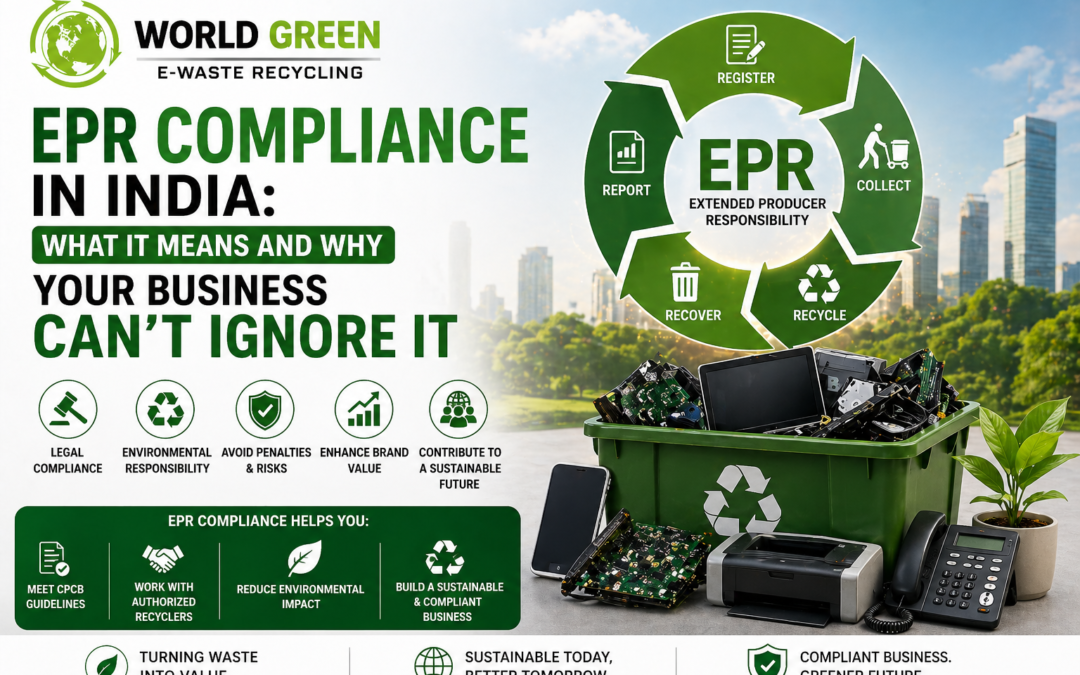
EPR stands for Extended Producer Responsibility. In simple words, it means that the responsibility for a product does not end the moment it is sold. As a producer or importer, you are also responsible for what happens to that product at the end of its life. So if your company sells laptops, mobile phones, batteries, or any electrical equipment — you are legally required to ensure those products are collected and recycled responsibly when they are no longer usable. The government does not want products to end up in landfills. And now, they have put rules in place to make sure they do not.
2. What Does the Law Actually Say?
India introduced the E-Waste Management Rules 2022 and the Battery Waste Management Rules 2022 to make EPR a legal requirement. Under these rules, businesses must register on the CPCB (Central Pollution Control Board) portal, set annual collection targets, tie up with certified recyclers, and submit compliance reports regularly. The targets increase every year — meaning the longer you wait, the harder it gets to catch up. By 2026, enforcement has become significantly stricter, and audits and penalties are very real.
3. Who Does EPR Apply To?
This is the part where many business owners are surprised. EPR is not just for large manufacturers. It applies to:
Producers — Companies that manufacture electronic goods or batteries in India.
Importers — Businesses that import electronics, phones, laptops, or batteries from outside India.
Brand Owners — Companies that sell products under their own brand name, even if manufactured elsewhere.
If you fall into any of these categories, you need to be EPR compliant. No exceptions.
4. What Happens If You Don’t Comply?
This is where it gets serious. Non-compliance with EPR rules can result in heavy financial penalties, cancellation of import licences, and even legal action. Beyond the legal side, there is also the reputational damage. In 2026, investors, clients, and business partners increasingly check whether a company handles its environmental responsibilities properly. Being caught non-compliant can cost you far more than just a fine — it can cost you contracts and credibility.
5. How Do You Actually Get Compliant?
Getting EPR compliant is not as complicated as it sounds — especially when you have the right partner. The basic steps are: register on the CPCB portal, set your collection targets, partner with a certified e-waste or battery recycler, collect and channel your waste through them, and file your compliance reports. That is it. A good recycling partner will walk you through each step and handle most of the heavy lifting for you. At World Green E-Waste, we work with businesses every day to help them meet their EPR obligations smoothly — from documentation and collection to certified recycling and reporting.
Do Not Wait Until It Is Too Late
EPR compliance is one of those things that seems easy to push to tomorrow — until tomorrow becomes a penalty notice. The rules are clear, the enforcement is real, and the process is genuinely manageable when you start early.
If your business is not yet EPR compliant — or if you are not sure whether it needs to be — reach out to us at World Green E-Waste today. We will help you figure out exactly what applies to your business and get you on the right track quickly and stress-free. Because compliance is not just about avoiding penalties — it is about doing business the right way.
📧 info@worldgreenewaste.com | 📞 +91 987 072 2728 | 🌐 www.worldgreenewaste.com

Recent Comments